



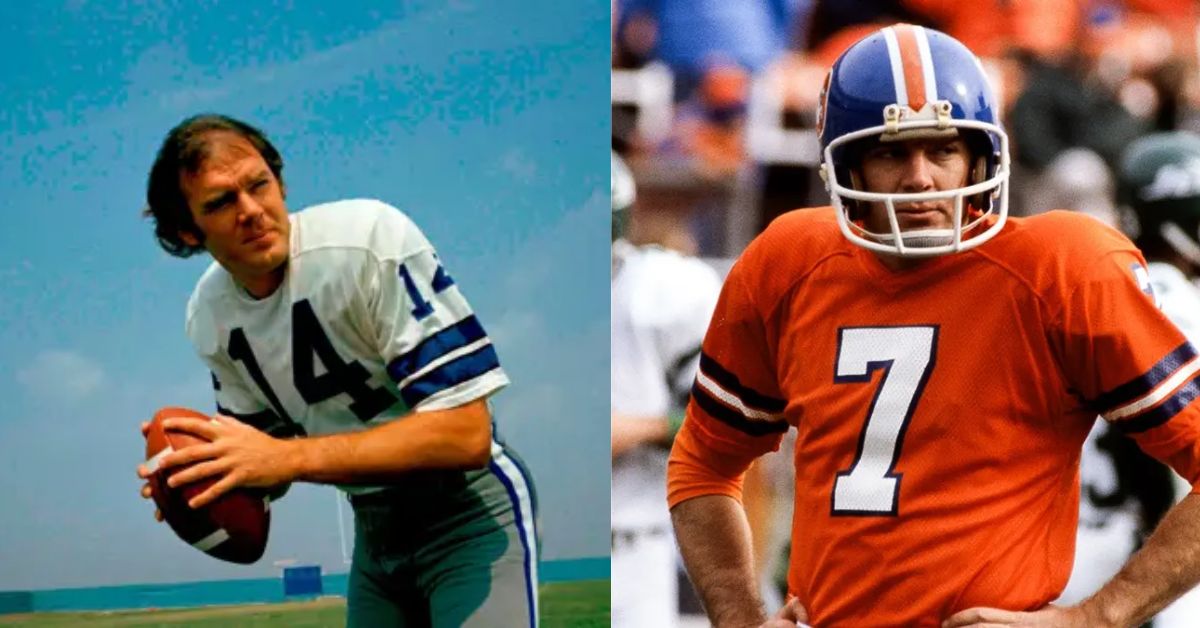
Craig Morton family confirmed the NFL legend’s passing on May 9, 2026, his wife Kym, children, and grandchildren were by his side until the very end.
Craig Morton spent 18 years making football history. But when he passed away on May 9, 2026, at 83 years old, it wasn’t the touchdowns or the Super Bowl starts that filled the room.
It was his family. He died surrounded by his loved ones at his home in Mill Valley, California, the same quiet Bay Area community where he had spent his final years.
His family confirmed the news the following Monday. No cause of death was officially disclosed. Reports from the fall of 2025 revealed that Morton had been battling serious back problems, recurring sepsis, and multiple lengthy hospital stays. He fought hard. He just ran out of time.
Craig Morton’s Wife Kym and Life After Football
Craig Morton is survived by his wife, Kym, along with his sister, his children, and his grandchildren. Kym has stayed almost entirely out of the public spotlight throughout their relationship, and the family has not released details about when or where they married.
What is known is that Kym was by his side at the end. The Broncos confirmed he died surrounded by family in Mill Valley, a small, close-knit town in Marin County just north of San Francisco. It’s the kind of place where people put down real roots.
For a man born in Greeley, Colorado, and raised in Campbell, California, it was fitting that he returned to the Bay Area he grew up in.
Craig Morton had deep roots in Northern California. He attended the University of California, Berkeley, where he became one of the greatest quarterbacks in school history.
He led the nation in passing yards with 2,121 yards as a senior in 1964, earned All-America honors, and finished fifth in Heisman Trophy voting. After nearly two decades in professional football, he came home.
Craig Morton’s Children, Grandchildren, and the Family He Left Behind
Morton is survived by his children and grandchildren. Their names and exact age have not been made public. The family has kept those details private, and that’s consistent with how Morton approached his personal life throughout his career and retirement.
He wasn’t a tabloid figure. He wasn’t someone who chased cameras off the field. Teammates remember him as tough and quietly confident, a player who carried a team on his shoulders and didn’t complain much about it.
Ring of Famer Haven Moses, speaking to the New York Times after Denver’s first AFC Championship, said it plainly:
“Craig Morton is unbelievable. To me, he’s the most valuable player in the National Football League this year.”
That kind of respect doesn’t come from highlight reels. It comes from how a person shows up every day, on the field and off.
Craig Morton’s NFL Career: A Legacy Built the Hard Way
Craig Morton did something no quarterback had ever done before him. He started a Super Bowl for two different franchises, the Dallas Cowboys and the Denver Broncos.
The Cowboys selected him fifth overall in the 1965 NFL Draft. He spent four seasons learning behind veteran Don Meredith before getting his shot. In 1970, he led Dallas to Super Bowl V, where the Cowboys lost 16-13 to the Baltimore Colts in a turnover-heavy game that earned the nickname “The Blunder Bowl.” Morton threw three interceptions that day. It wasn’t his finest moment, but it didn’t define him.
The quarterback controversy with Roger Staubach that followed was one of the most talked-about situations in early 1970s football.
At one point, in a game against the Chicago Bears, head coach Tom Landry had the two alternating literally every single play.
That’s not something coaches try anymore, and there’s a reason for that. Morton eventually requested a trade and was dealt to the New York Giants in 1974.
His time with New York was forgettable by most accounts. But what came next wasn’t.
The Denver Broncos acquired Morton in 1977, and he completely transformed the franchise. That season, he guided Denver to a 12-2 record, back-to-back playoff wins over the Pittsburgh Steelers and the Oakland Raiders, and the team’s first-ever Super Bowl appearance.
He did it playing through a painful hip injury, spending part of the week before the AFC Championship in the hospital. Denver’s defense, nicknamed the “Orange Crush,” was suffocating. Morton was the steady hand that got them there.
He was named AFC Offensive Player of the Year, PFWA Comeback Player of the Year, and NFL UPI MVP for the 1977 season. The Super Bowl itself went badly, the Cowboys won 27-10 and Morton threw four interceptions, but what he built in Denver that year meant everything to the city.
He spent six seasons with the Broncos before retiring after the strike-shortened 1982 season. He finished as Denver’s all-time leader in passing yards (11,895), passing touchdowns (74), pass attempts (1,594), and completions (907) at the time of his retirement. His 41 regular-season wins still rank third in franchise history. Overall, he threw for 27,908 yards and 183 touchdowns across his entire career.
The Broncos inducted him into their Ring of Fame in 1988. He was inducted into the College Football Hall of Fame in 1992, the Colorado Sports Hall of Fame in 1986, and the San Jose Sports Hall of Fame. Four halls of fame. Eighteen NFL seasons. Two Super Bowl starts with two different teams. A wife, children, and grandchildren who were there when it mattered most.
FAQs
When did Craig Morton die?
Craig Morton passed away on May 9, 2026, at age 83, at his home in Mill Valley, California.
What was Craig Morton’s net worth?
Craig Morton’s net worth has not been officially disclosed, though his 18-year NFL career and multiple Hall of Fame inductions point to a comfortable retirement.
What were Craig Morton’s career stats?
Morton finished his NFL career with 27,908 passing yards, 183 touchdowns, and an 81-62-1 record as a starter across 18 seasons.
What was Craig Morton’s cause of death?
No official cause of death was disclosed, though the Denver Gazette had reported in late 2025 that Morton had been dealing with serious back problems and recurring sepsis.
