



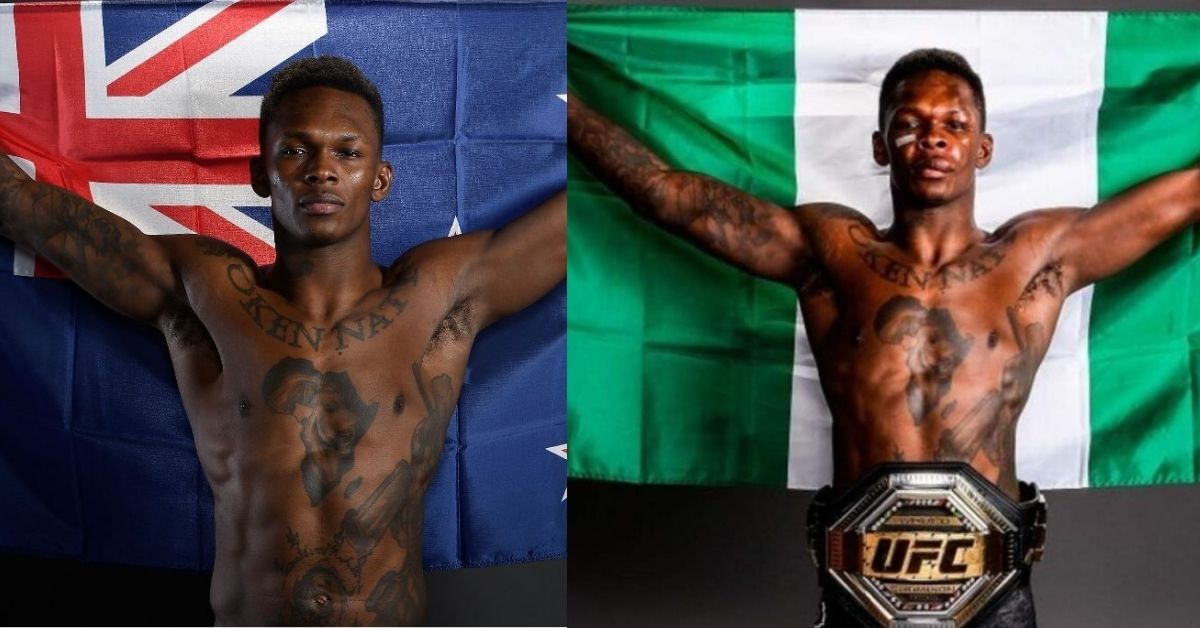
Most people know Israel Adesanya as the Last Stylebender, the flashy, anime-obsessed, two-time UFC middleweight champion who made the middleweight division must-watch television.
But ask a casual fan where he is actually from, what Israel Adesanya nationality is, and you might get a confused answer.
Is he Nigerian? Is he a New Zealander?
The answer is both, and the journey between those two identities is one of the most fascinating origin stories in all of MMA.
Who Is Israel Adesanya?
Israel Mobolaji Temitayo Odunayo Oluwafemi Owolabi Adesanya was born on July 22, 1989, in Lagos, Nigeria.
He is a Nigerian-New Zealand professional mixed martial artist who competes in the middleweight division of the Ultimate Fighting Championship and is a former two-time UFC middleweight champion.
As of March 2026, he sits at number four in the UFC middleweight rankings and remains one of the most technically gifted strikers the sport has ever seen.
His father Oluwafemi, is an accountant, and his mother Taiwo, is a nurse. He is the eldest of five siblings and was raised in a well-off family in Lagos, where he attended Chrisland School in Opebi.
Israel Adesanya Nationality: Nigerian, New Zealander, or Both?
This is the question fans search for all the time, and the answer is straightforward.
Israel Adesanya holds dual nationality, he is both Nigerian by birth and a New Zealand citizen by immigration.
In the UFC, he competes out of Auckland, New Zealand, which is why his name is often listed under the New Zealand flag.
But he has never hidden or downplayed his Nigerian roots, not even for a single second.
His parents made the decision to leave Nigeria before he could finish secondary school, wanting their children to receive an internationally recognized education.
The family spent ten months in Ghana weighing their options, and with the United States in turmoil following the September 11 attacks, they chose New Zealand.
The family settled in Rotorua, a city on the North Island, where a young Israel finished his high school education at Rotorua Boys’ High School.
That move changed everything, but it was not easy.
From Lagos to Rotorua, A Culture Shock That Built a Champion
Adesanya has spoken openly about how difficult those early years in New Zealand were.
He described the experience as a complete culture shock, a Nigerian kid landing in a mostly white school in a small New Zealand city, trying to figure out where he fit.
He was bullied during his high school years, and he has said that the mistreatment he experienced was a major reason he later turned to martial arts.
He tried to blend in, copying the accents and mannerisms of his classmates, feeling like the odd one out in his adopted country.
That feeling is even tattooed on his body, his tattoo, reading “Broken Native”, is a direct reference to being removed from his home in Nigeria and never fully belonging anywhere else.
But New Zealand also gave him something that Nigeria could not have in the same way, a direct path into martial arts and combat sports.
He started training in kickboxing at the age of eighteen after being inspired by the Muay Thai film Ong-Bak, and from that moment, the trajectory of his life was set.
Israel Adesanya’s Ethnicity, Yoruba and Proud
When it comes to ethnicity, Israel Adesanya is Yoruba, one of the largest and most prominent ethnic groups in Africa, predominantly found in Nigeria.
The Yoruba people have a rich cultural history, and Adesanya carries that identity with him everywhere he goes.
He speaks Yoruba fluently alongside Nigerian Pidgin and English, making him genuinely multilingual in a way that reflects the fullness of his background.
His Yoruba roots became a talking point in MMA circles during his rivalry with South African fighter Dricus du Plessis, who questioned Adesanya’s connection to Africa, given that he lives in New Zealand.
Adesanya fired back hard, and their clash, both verbal and eventually inside the octagon at UFC 305, became one of the most culturally charged storylines in recent UFC history.
The Kickboxing Career That Came Before the UFC
Before Adesanya ever stepped foot inside a UFC octagon, he built an extraordinary kickboxing career.
He fought extensively in New Zealand, Australia, and China, including numerous bouts in the Wu Lin Feng promotion, and amassed a professional kickboxing record of 75 wins and 5 losses.
Israel Adesanya says he has no plans of boxing after he is finished with his MMA career:
— MMA UNCENSORED (@MMAUNCENSORED1) January 3, 2026
“I thought about this two months ago, and I always said like, nah, you'd never catch me.
This is the ultimate form of fighting, which is mixed martial arts. You are using all your limbs,… pic.twitter.com/X6PGt0QXv5
He won the King in the Ring tournament in New Zealand multiple times and challenged for the Glory middleweight championship, establishing himself as one of the best strikers on the planet long before the UFC came calling.
He signed with the Ultimate Fighting Championship in December 2017 and made his UFC debut in February 2018, winning by TKO in the second round and earning a Performance of the Night bonus. He never looked back.
From UFC Debut to Two-Time Middleweight Champion
Adesanya’s rise through the middleweight division was rapid and relentless.
He defeated Robert Whittaker by knockout at UFC 243 to become the undisputed UFC middleweight champion, then successfully defended the title against Yoel Romero and Paulo Costa- stopping Costa by TKO in a dominant performance at UFC 253.
His rivalry with Alex Pereira became the defining chapter of his recent UFC career. Pereira defeated him twice, once in kickboxing and once at UFC 281, before Adesanya reclaimed the UFC middleweight title at UFC 287 with a stunning knockout in the second round.
It was one of the most celebrated wins of his career and one of the best redemption stories the sport has seen.
He later fought Dricus du Plessis at UFC 305, with du Plessis winning by submission in a fight that had enormous cultural significance given their rivalry over African identity.
A Nigerian-New Zealander Who Belongs to the World
What makes Israel Adesanya’s nationality story so compelling is that it resonates far beyond sports.
He is a third-culture kid who grew up between worlds, Nigerian by blood, Kiwi by citizenship, and global by influence.
His love of anime and manga, his passion for dance, his multilingual fluency, and his ability to connect with audiences across continents all reflect a man who has turned a complicated identity into his greatest strength.
He became only the second African-born champion in UFC history, alongside Kamaru Usman, and his impact on expanding the UFC’s presence across Africa and the Pacific has been enormous.
Whether he is competing in the middleweight division, breaking down fights on ESPN, or talking about his dream of starting an anime production company after retirement, Israel Adesanya is always, unmistakably, himself.
A Nigerian. A New Zealander. The Last Stylebender.
For more stories on the backgrounds and lives of your favorite athletes, visit The Sportory.
