



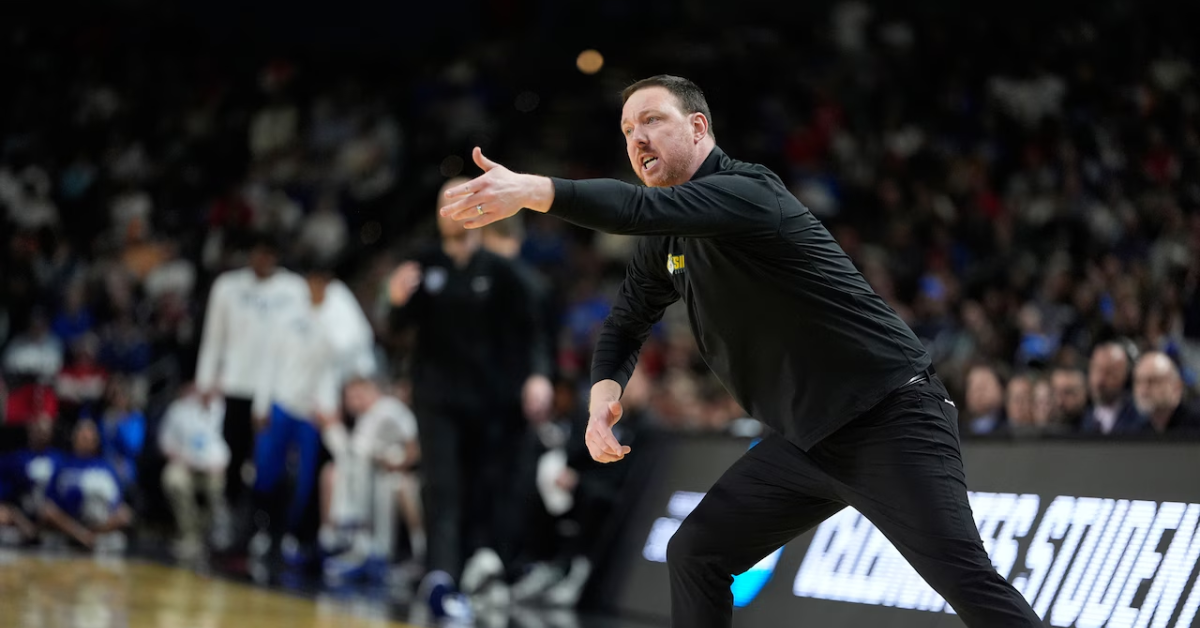
Syracuse basketball is in crisis. Five straight NCAA Tournament misses. Two losing seasons. One familiar face is being trusted to fix it all. G-Mac is coming home.
SYRACUSE, N.Y. — When the university announced Gerry McNamara as its next men’s basketball head coach, the reaction from longtime Orange fans was less surprise than relief. Finally.
McNamara, 41, spent two seasons rebuilding a broken program at Siena before the school that shaped him came calling. He accepted. And for anyone who has tracked his career from a teenage phenom out of Scranton to Jim Boeheim’s trusted right hand. The appointment feels less like a fresh start than a long-overdue arrival.
“This is Syracuse basketball trying to find its way back to itself,” said one program booster, who asked not to be named ahead of an official welcome event.
Scranton Made Him Tough, Syracuse Made Him a Legend
McNamara grew up the youngest of four children in Scranton, Pennsylvania. He grew up in a working class household where basketball was taken seriously. The community was tightly woven. At Bishop Hannan High School, he became a regional legend, a composed, fearless point guard who led the school to a state championship and drew recruiting interest from programs across the country.
Syracuse won that battle. What followed over four years was the kind of college career that fills a city’s memory bank. McNamara was never the biggest or fastest player on the court, but he had a rare quality that coaches spend careers trying to develop in players: he did not rattle. It was also during his time at Syracuse that he would eventually cross paths with Katie Marie Stott, the woman who would later become his wife and the steady presence behind everything he built on and off the court.
His most defining moment came in 2003, when he helped the Orange win the national championship. Three years later, when a rough stretch had some critics turning on him publicly, Boeheim stepped to the podium and shut the conversation down. Without McNamara, Boeheim said, the team would not have won ten games that season. Not eight, not twelve. Ten.
That is a head coach putting his credibility on the line for a player. It is not done lightly.
Fifteen Years of Learning Before His Moment Finally Came
After a brief professional career that never gained traction, McNamara made a choice that defined what kind of person he is. He went back to Syracuse. Not for a ceremonial role or a title, but as a graduate manager in 2009, doing the grinding, invisible work that keeps a program running.
He earned a full assistant position two years later. By 2023, when Boeheim stepped down after 47 seasons, and Adrian Autry was given the head job, McNamara was the associate head coach. Fifteen years of steady, patient work with none of the impatience that often derails former players who try to fast-track into leadership.
Then came the decision that changed his trajectory entirely.
From Four Wins to a Tournament Team, How Siena Made McNamara Ready
In 2024, McNamara left Syracuse to take over at Siena, a small Catholic school in Albany whose program had won four games the season before he walked in. Four. It was not a glamour hire. It was a proving ground.
He treated it like one.
Year one showed measurable improvement. Year two was a statement. Siena won the MAAC Tournament, punched its first NCAA Tournament bid since 2010, and landed a first-round matchup against No. 1 overall seed Duke. As a 16-seed.
They lost. But not quietly. Siena trailed by double digits in the second half and kept coming, kept executing, kept competing until the final buzzer. Duke escaped, but not comfortably. When McNamara addressed reporters afterward, he said simply that he had never been prouder of a group of players in his coaching life.
His overall record at Siena was 37-30. The skeptics will point to that. But those numbers represent a MAAC championship, a tournament appearance, and a first-round scare of the nation’s top program. Without a Power Five budget. Without established recruiting pipelines. Just coaching.
The Program McNamara Left Behind Was Struggling to Find Its Way
While McNamara was proving himself in Albany, the program he left behind was struggling.
Autry was let go on March 11 after Syracuse finished 15-17. It was the program’s second consecutive losing season. The Orange went 6-12 in the ACC and finished 14th in the conference, well below preseason projections that placed them around ninth.
Five straight years without the NCAA Tournament. The last time Syracuse missed that many consecutive postseasons, it was the late 1960s, a completely different era of the sport.
The Carrier Dome, once one of college basketball’s most intimidating venues, had grown quieter. Recruiting had softened. The 2-3 zone defense that Boeheim made famous started looking more like a structural vulnerability than a weapon. The fan base went from patient to frustrated to something closer to numb.
The Program McNamara Left Behind Was Struggling to Find Its Way
Critics will note, reasonably, that the MAAC does not prepare programs for Big East or ACC competition. McNamara’s record at Siena is not an overwhelming statistical case on its own.
But context matters. He turned a four-win program into a conference champion in two seasons. He did it on a limited budget, through player development and genuine trust-building. Now place him at an ACC program with NIL resources that reportedly rank in the top third of the conference, an iconic venue, a famous system he has spent his entire adult life working within, and a fanbase desperate for something to believe in.
That math is harder to dismiss.
Beyond the resume, there is the irreplaceable factor of institutional knowledge. McNamara knows this program from the inside in a way no outside hire ever could. He knows what the 2-3 is supposed to feel like when it is working. He knows what the building sounds like when it is alive. He does not need time to understand Syracuse. He already does.
The Hire Is Done, Now Comes the Part That Actually Matters
The offseason work begins immediately. The transfer portal will be McNamara’s primary roster-building tool in year one, and his reputation for building real relationships with players should help considerably in that process.
Two names worth watching from his Siena roster: Gavin Doty, a first-team all-conference guard who happens to be from Fulton, and Francis Folefac, a freshman big man who showed genuine composure against Duke. If either transfers to follow their coach to the ACC, it would be an early and meaningful signal.
High school recruiting will take longer to rebuild. It always does when a program has been down. But having McNamara’s name and story attached to the pitch changes conversations in living rooms across the country.
No one is promising a quick turnaround. The ACC is unforgiving, and the roster needs significant work. But the direction is right, the hire is right, and the energy around the program has shifted in a way it has not in several years.
McNamara has been married to Katie Marie Stott since 2007. He keeps his family out of the public eye and maintains close ties to his parents and siblings back in Scranton. People who have worked with him describe a coach who is direct, fair, and the kind of person players genuinely want to run through walls for. That Duke game was not a fluke. That kind of performance comes from deep trust.
He left Syracuse in 2024 with something to prove. He went to a program nobody expected much from and proved it anyway. Now he is back, not as a former star returning for a victory lap, but as a head coach ready to build.
The lights are back on. And the man flipping the switch already knows every corner of the building.
Frequently asked questions :
What is Gerry McNamara’s hometown?
McNamara was born and raised in Scranton, Pennsylvania. He is a local legend there, having led Bishop Hannan High School to a state championship before heading to Syracuse.
Who is the McNamara family?
Gerry is the youngest of four children born to Gerard and Joyce McNamara. He has one brother, Timothy, and two sisters, Bridget and Maureen. He and his wife, Katie, have children of their own, though their names are generally kept private.
What ethnicity is MacNamara?
The surname McNamara (or MacNamara) is of Irish origin. It is a prominent sept from County Clare, originally “Mac Conmara,” which translates to “Son of the Hound of the Sea.”
What is Gerry McNamara’s net worth?
While exact private finances aren’t public, several estimates place his net worth around $500,000 to $1 million. This figure is expected to grow significantly given his recent promotion to high-profile head coaching roles.
Who is Gerry McNamara’s wife?
He is married to Katie Marie Stott. The couple wed on July 21, 2007.
What is Gerry McNamara’s salary?
As of early 2026, his salary at Siena was estimated to be in the $400,000 – $600,000 range. However, having just been named the Head Coach at Syracuse University (March 2026), his new salary is expected to be significantly higher, likely in the multi-million dollar range typical for ACC head coaches.
What is Gerry McNamara’s height?
Gerry McNamara is 6 feet 2 inches (188 cm) tall.
